AI Upskilling Workshop Catalog
Published June 3, 2026
Many scientists in the biopharma industry think they’re underusing Large Language Models for their science. Is it just a chat interface or an email writer? Something is missing.
My colleague Sonia Timberlake and I adapted best practices from AI superteams into workshops designed for life science professionals. In these workshops, we provide hands-on case studies for participants to experience the power (and edges) of the best LLMs using examples close to their work. This includes writing research summaries, analyzing data, and building pipelines.
Here’s the list of what we offer, either as a drop-in class using public data or customized to our clients’ internal systems.
Agentic coding for computational biology
Workshop name: Agentic coding for Computational Biology
Problem statement
Agentic coding is increasing the productivity of software developers. What agentic coding practices can be applied to computational biology?
We have adapted software development workshops into the “Scientific Specification-Driven Development” method, which employs spec design with agentic validation loops that respond to data.
See the examples of the final projects here on the class website.
Learning goals
- Adopt agentic coding best practices from software dev
- Spec-driven development with LLM critique
- Adapt AI systems with domain expertise
- Provide the right context, skills, and tools
Example Case Study
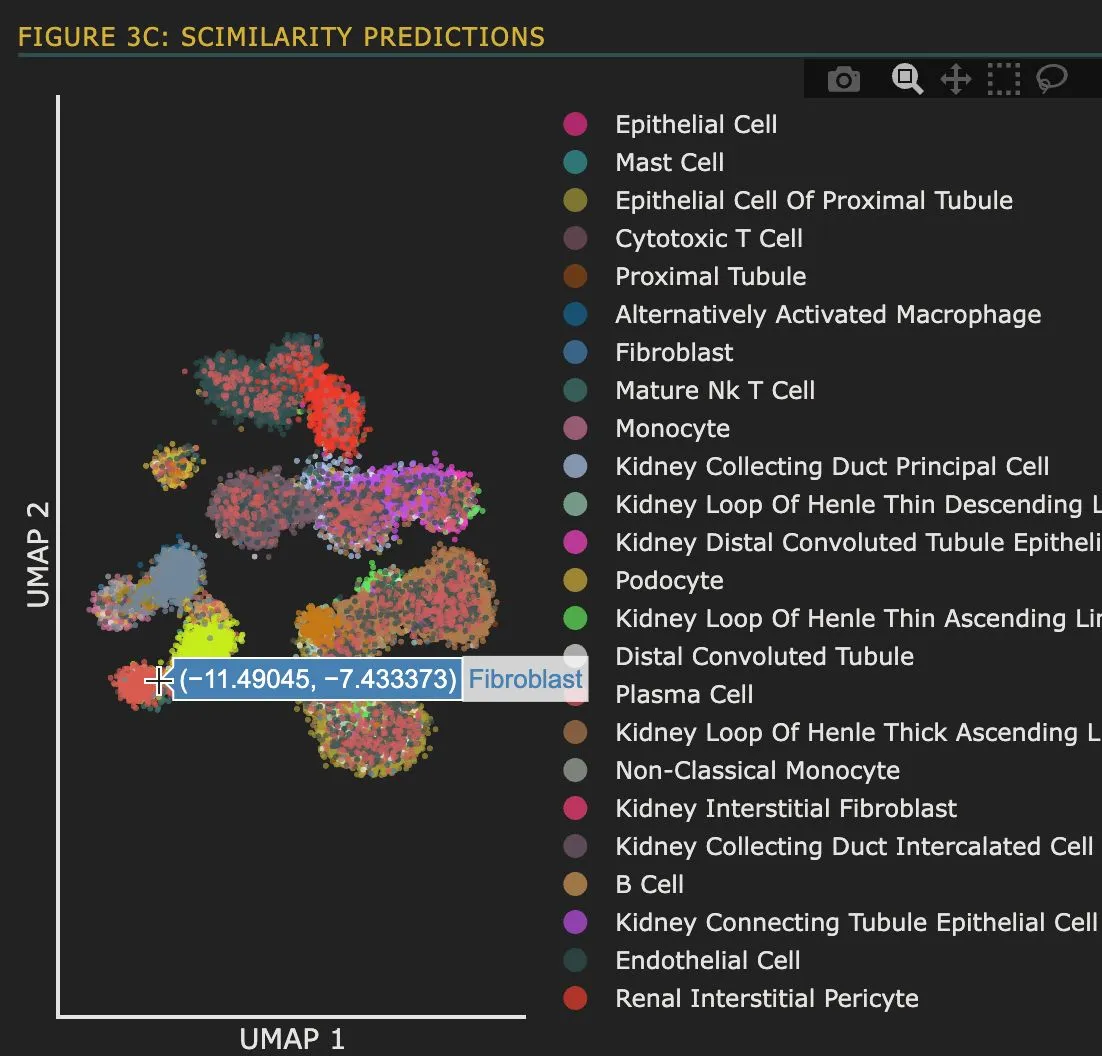
Use a foundation model to process single cell genomics data and answer drug development questions. Develop “skills” to navigate public data sets and employ MCPs to test hypotheses.
Walk away with an interactive dashboard comparing public data to predictions of cell types using a foundation model, developed in under 3 hours.
Audience
Computational biologists in biotech or pharma
Workflow management for computational biology
Workshop name: Use AI to turn your scripts into a pipeline
Problem statement
Computational biologists often maintain analysis scripts with the intention of turning them into a pipeline, but don’t have the time to learn a pipeline language or containerization patterns. Now, LLMs can turn functioning scientific scripts into a pipeline, complete with environment and testing suite.
Learning goals
- Have AI write a pipeline (e.g. with Snakemake/WDL/etc) from analysis scripts and common computational biology tools
- Architectural basics for pipelines
- Dockerization and reproducible environments
- Writing and running tests
Example Case Study
Multistep genomic analysis from downloading data, pre-processing, and aligning to references to creating an interactive report.
Audience
Computational biologists in biopharma (also applies to academics)
AI for knowledge work in biopharma
Workshop name: Best Practices for AI for knowledge work in biopharma
Problem statement
AI can do more than write emails; it can be a trusted scientific collaborator across research and development. Participants develop an intuition for the strengths and limitations of the latest models so that LLMs can be safely integrated into scientific workflows.
Learning goals
- Give the LLM the right autonomy, tools, and context to be an effective co-worker
- Literature review with LLMs
- Develop data-driven intuition for current strengths and weaknesses of models
- Summarize data into effective communications
Example Case study
Create a research proposal relevant to your work that summarizes existing data and identifies next steps, with multiple review points to limit hallucinations.
Audience
All scientists, from RAs to VPs
AI upskilling for IT professionals
Workshop name: Use LLMs to Deploy Secure Cloud Infrastructure for Enterprise Life Sciences
Problem statement
If you’re an IT leader in the life sciences, you probably rely on a suite of MSPs to meet the fast-moving needs of your scientific customers. Besides being a budget-breaker, this can be a headache to manage. To what extent can we use AI to bring these capabilities in-house, reducing cost and increasing compliance?
Learning goals
- Learn access patterns that scientists need from cloud resources
- Learn how cloud changes security paradigms
- Use AI to Terraform a cloud environment (i.e. with built-in controls)
- Create a configuration release and control process with human and AI checks
- Create a corporate knowledge base with a help agent
Example Case study
- A Terraform environment for a practical cloud application (i.e. “a scientist needs to deploy this” and this is the way to securely do it)
- Auto-generated cloud diagram with security checks
- Change management SOPs and skills for agents
Audience
IT professionals Hands-on IT leadership
Contact
Let's talk about your data.
info@rightbionic.com
Based in Boston, MA
rightbionic.com